
 By
By 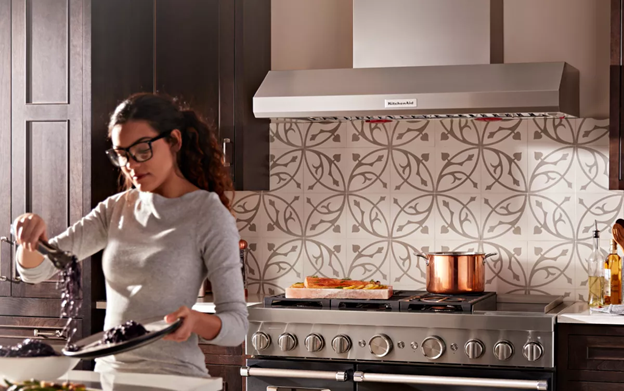
The stove range hood might be one of the most overlooked items in your kitchen, yet it plays a crucial role in keeping your indoor environment clean and healthy. The main job of an oven hood is to get rid of cooking odors and harmful contaminants released during cooking, but many of us only switch it on when something burns, or worse, some kitchens don’t even have one.
According to kitchen designer Ellen Cheever, people often see the hood as nothing more than a noisy light. They fail to recognize its importance. When you cook, tiny particles of grease, water, smoke, and food are released into the air. These particles settle on surfaces throughout your home, causing grime buildup and damaging finishes. Moreover, without proper ventilation, your living space can become smelly.
Beyond odors, there are health concerns associated with cooking. Richard Shaughnessy, a researcher at the University of Tulsa, explains that cooking produces ultra-fine particles coated with chemicals that are harmful to breathe in. Gas stoves also emit nitrogen dioxide, a byproduct of incomplete combustion, which can lead to respiratory issues, especially in children.
To effectively vent your stove, it’s best to vent to the outside. This means investing in a good-quality range hood that can exhaust air outside your home. While a decent unit may cost around $150 to $200, installation should be done by professionals, and you might spend around $500 in total, including outdoor ventilation.
The hood should be installed about 24 to 30 inches above your stove and cover the width and most of the depth, especially over the front burners. When choosing a hood, consider its cubic feet per minute (CFM) rating, which should match your stove’s energy output. For gas stoves, the rule of thumb is to have 100 CFM per 10,000 BTUs of burner output.
If outdoor venting isn’t possible, recirculating range hoods are an alternative. They filter air through grease and charcoal filters and reintroduce it into space. While not as effective as venting outside, they’re better than nothing.
Regardless of the type of hood you have, it’s essential to turn it on whenever you cook and to clean the grease filter regularly. Filters should be replaced every three months if you cook frequently. If you don’t have a hood over your stove, your local appliance store can help you find a suitable solution.
In conclusion, ensuring adequate ventilation in your kitchen, whether through outdoor venting or
The use of recirculating hoods is vital for keeping the air clean and your indoor environment healthy. Proper ventilation helps to remove cooking odors, smoke, and airborne particles that can settle on surfaces, leading to grime buildup and potentially damaging finishes. Additionally, it plays a crucial role in minimizing health risks associated with cooking, such as inhaling harmful chemicals and pollutants released during the cooking process.






Comments