
 By
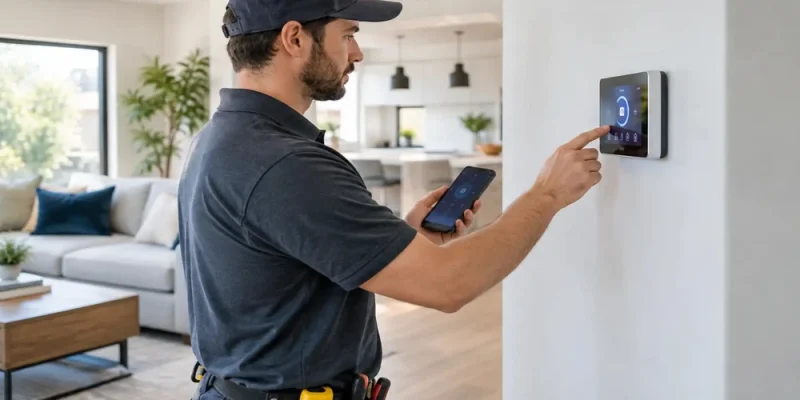
A smart thermostat can make a noticeable difference in how comfortable a home feels throughout the year. From adjusting temperatures before arriving home to creating schedules that reduce unnecessary heating and cooling, these devices give homeowners more control over their indoor environment. In Austin, Texas, where long, hot summers and occasional winter cold snaps put residential HVAC systems to work, choosing and installing the right thermostat is especially important.
However, upgrading to a smart thermostat involves more than removing an old wall-mounted control and connecting a new device. The existing thermostat wiring, heating and cooling equipment, power requirements, and compatibility with other smart home devices all play a role in determining whether an installation will work as intended.
Some homes have straightforward wiring that makes a thermostat upgrade relatively simple. Others may need additional wiring, a compatible power adapter, or help identifying problems with an existing HVAC control system. Understanding these details before purchasing a thermostat can prevent frustrating installation issues and help homeowners get the most from their investment.
How Smart Thermostats Connect to Existing Heating and Cooling Systems
Traditional thermostats typically control heating and cooling by opening or closing electrical control circuits when the indoor temperature moves above or below a selected setting. Smart thermostats perform a similar function but add features such as Wi-Fi connectivity, remote temperature adjustments, programmable schedules, energy-use reports, and integration with compatible home automation platforms.
Most residential smart thermostats communicate with an HVAC system through low-voltage control wiring. These wires connect the thermostat to the equipment’s control board, allowing it to request heating, cooling, fan operation, or other supported functions.
Common thermostat terminals include:
- R or Rc/Rh: Supplies control voltage from the HVAC system’s transformer.
- C: Provides a common connection that completes the low-voltage power circuit for compatible thermostats.
- Y or Y1/Y2: Controls one or more stages of cooling, depending on the system.
- W or W1/W2: Controls heating stages or auxiliary heating functions.
- G: Controls the indoor blower fan.
- O/B: Controls the reversing valve on many heat pump systems.
Not every thermostat uses every terminal, and terminal functions can vary by equipment type. Some systems also use proprietary controls, communicating thermostats, or specialized wiring arrangements that are not compatible with standard smart thermostats.
Before choosing a replacement, homeowners should identify the type of heating and cooling system in their house and verify that the thermostat supports its control requirements.
This is particularly important in Austin-area homes where conventional central air conditioning, heat pumps, electric heating, and multistage HVAC equipment may all be found. A thermostat that works perfectly in one house may not provide the correct functionality in another.
Understanding C-Wire Requirements for Smart Thermostats
One of the most common questions homeowners encounter when shopping for a smart thermostat is whether their existing system has a C-wire.
The common wire, usually labeled C, provides a continuous return path for low-voltage power from the HVAC system’s transformer. Many Wi-Fi-enabled thermostats need this connection to operate their displays, wireless radios, sensors, and other electronic components without repeatedly drawing power through the heating or cooling control circuits.
Older thermostats often operate without a dedicated C-wire because they require little or no continuous electrical power. When homeowners replace these devices with modern smart thermostats, they may discover that the existing wiring does not meet the new thermostat’s requirements.
How to tell whether your home has a C-wire
Start by examining the existing thermostat’s wiring, provided it can be accessed safely. If a wire is connected to the terminal marked C at the thermostat, the system may already have the necessary common-wire connection.
However, the presence of an unused wire behind the thermostat does not automatically mean a working C-wire is available. The wire must also be connected appropriately at the HVAC equipment, and the control system must support the intended configuration.
A qualified professional can check the wiring at both ends and determine whether the existing conductors can support the new thermostat.
Homeowners should never assume that wire colors alone establish their function. Although conventional color patterns are common, previous installations and repairs may have used different colors or configurations.
What if there is no C-wire?
Fortunately, the absence of a C-wire does not always mean that a smart thermostat is impossible to install.
Depending on the equipment and thermostat model, potential solutions include:
- Using a manufacturer-approved power adapter: Some thermostats include or support an adapter that creates a suitable power connection using existing conductors.
- Installing a compatible common-wire accessory: Certain HVAC systems support accessories designed to provide a common connection without running an entirely new cable.
- Running additional thermostat wiring: A new low-voltage cable may be the most dependable option when existing conductors are insufficient.
- Choosing a thermostat designed for the existing system: Some models support alternative power arrangements, although compatibility must be verified carefully.
Each option has limitations. A power adapter that works with one HVAC system may not be suitable for another, and some equipment requires specific wiring arrangements to maintain reliable operation.
An improperly configured power-stealing thermostat can sometimes cause symptoms such as short cycling, unexpected equipment activation, or intermittent operation. These problems do not occur in every installation, but they illustrate why the manufacturer’s wiring instructions matter.
Tejas Electric can help Austin homeowners evaluate electrical wiring requirements and determine whether additional wiring or electrical work is appropriate for a smart thermostat upgrade.
Smart Thermostat Compatibility With Heat Pumps and Multistage HVAC Systems
Before purchasing a smart thermostat, it is important to look beyond the brand name and advertised features. Compatibility with the home’s actual heating and cooling equipment is what determines whether the thermostat can control the system correctly.
Heat pumps require special attention
Heat pumps provide both heating and cooling by reversing the direction in which heat moves. A reversing valve changes the system’s operating mode, and the thermostat must be configured to control that valve correctly.
Many heat pumps use an O or B terminal for reversing-valve control. The correct configuration depends on the equipment manufacturer and system design.
If the thermostat is configured incorrectly, the system may behave as though it is calling for the opposite operating mode. Homeowners might notice that the air conditioner appears to heat the home or that heating operation does not work as expected.
Heat pumps may also use auxiliary or emergency heat. A compatible thermostat must support the appropriate heating stages and control logic for the installed equipment.
Because heat pump systems can be more complicated than conventional air conditioners and furnaces, it is worth confirming compatibility before beginning an installation.
Multistage heating and cooling systems
Some HVAC systems have multiple heating or cooling stages that allow output to increase when the home needs more heating or cooling capacity.
For example, a two-stage air conditioner can operate at a lower capacity under moderate conditions and increase output when temperatures rise or the cooling demand becomes greater.
A compatible thermostat must support the system’s stages and be configured to use them properly. Otherwise, the equipment may not operate as intended, and the homeowner may lose some of the comfort or efficiency benefits the system was designed to provide.
The same consideration applies to multistage furnaces, dual-fuel systems, and equipment with auxiliary heating.
Other compatibility concerns
Austin homes may also contain zoned HVAC systems, ductless mini-splits, communicating equipment, or specialized controls installed during a renovation.
Zoned systems can require thermostats and control panels designed to work together. Some mini-splits use proprietary controls or require a manufacturer-approved interface rather than conventional thermostat wiring.
If the existing thermostat is connected to a communicating HVAC system, replacing it with a standard smart thermostat may eliminate certain equipment functions or prove incompatible altogether.
The safest approach is to check the HVAC model numbers, thermostat documentation, and wiring diagram before buying replacement equipment.
Evaluating Existing Thermostat Wiring Before an Upgrade
A successful smart thermostat installation starts with understanding what is already in place.
In many homes, the thermostat wiring has been installed for years and may have undergone several repairs or modifications. A homeowner might see five or six conductors behind the thermostat without knowing whether all of them are connected, functional, or suitable for the new device.
A pre-installation assessment should consider several factors.
First, identify the existing thermostat and HVAC equipment. Record the model numbers when possible and check the thermostat manufacturer’s compatibility guidance. This helps establish whether the proposed replacement supports the home’s equipment.
Second, inspect the available wiring. Determine which conductors are present, how they are connected, and whether a suitable common-wire connection is available. Unused conductors should be evaluated rather than assumed to be ready for use.
Third, check the system’s control requirements. Heat pumps, multistage systems, and specialized HVAC equipment may require connections that a basic smart thermostat does not provide.
Fourth, investigate existing problems. If the old thermostat has been losing power, displaying errors, or failing to activate heating or cooling consistently, replacing it may not resolve the underlying issue. A loose connection, transformer problem, damaged wire, or HVAC control-board fault could be responsible.
Finally, review the proposed installation location. Thermostats should generally be positioned where they can measure representative indoor temperatures, away from direct sunlight, drafts, supply registers, and other conditions that may distort readings.
Taking these steps before installation helps avoid buying incompatible equipment and reduces the likelihood of discovering unexpected wiring problems halfway through the project.
Integrating Smart Thermostats With Sensors and Home Automation
One of the biggest advantages of a smart thermostat is the ability to coordinate heating and cooling with other connected devices.
Depending on the model and ecosystem, a thermostat may work with remote temperature sensors, occupancy sensors, smart speakers, security systems, and home automation routines.
Remote sensors can help address temperature differences between rooms. For instance, an upstairs bedroom may become warmer than the downstairs living room during a hot Austin afternoon. A compatible sensor can give the thermostat additional information to help manage comfort in the selected areas.
Not every thermostat uses remote sensors in the same way. Some models allow homeowners to prioritize particular rooms at certain times, while others combine readings according to their own algorithms. A sensor also does not necessarily create an independent HVAC zone; that requires compatible zoning equipment.
Automation routines can make everyday temperature management more convenient. A homeowner might create a schedule that adjusts the thermostat when the household typically leaves for work or school, then returns to a comfortable setting before everyone arrives home.
Other possible integrations include:
- Adjusting temperature settings when a compatible occupancy or security system changes state.
- Using voice commands to make temperature adjustments.
- Coordinating thermostat schedules with smart home scenes.
- Receiving alerts about temperature conditions or connectivity problems.
- Managing settings remotely while traveling.
Compatibility varies by thermostat, connected platform, subscription plan, and device generation. Some integrations require a particular hub or manufacturer-specific service.
Homeowners should also consider privacy and account security when connecting devices to a home network. Use strong, unique passwords, enable multifactor authentication when available, and review which devices and services have access to the thermostat.
A well-planned installation should account for both the physical wiring and the digital ecosystem. The goal is to make the technology work together reliably rather than introduce unnecessary complexity.
Can You Install a Smart Thermostat Yourself?
For a handy homeowner, installing a smart thermostat can look like a manageable weekend project. Some manufacturers design their products specifically for do-it-yourself installation, and a straightforward replacement may involve little more than identifying existing low-voltage connections and following the supplied instructions.
However, not every installation is equally simple, and there is an important difference between replacing a compatible thermostat and modifying the home’s electrical or HVAC control wiring.
When a DIY installation may be reasonable
A homeowner may be able to handle a basic replacement when all of the following conditions are met:
- The thermostat manufacturer explicitly supports the existing HVAC system.
- The current wiring is clearly identified and in good condition.
- The required power connection is already available.
- No new wiring, electrical circuit, or equipment modification is necessary.
- The homeowner can follow the manufacturer’s instructions and safely isolate the equipment as directed.
Even in these circumstances, it is important to shut off the appropriate HVAC power before handling wiring, follow the manufacturer’s safety instructions, and avoid allowing conductors to touch one another.
Low-voltage thermostat wiring is not the same as line-voltage wiring, but HVAC equipment may contain hazardous voltages inside its cabinet. A thermostat installation should never involve guessing about connections or working inside energized equipment.
When professional installation is the better choice
Professional help is advisable when the project involves missing or questionable wiring, an unfamiliar heat pump, multistage equipment, a communicating HVAC system, repeated thermostat failures, or a need to run additional cable.
If the installation requires changes to electrical circuits or work on line-voltage equipment, the applicable licensing and safety requirements must also be considered.
Texas licensing requirements depend on the actual scope of work. Not every simple thermostat replacement automatically requires a licensed electrician, and HVAC-specific work may fall under different licensing requirements. Homeowners should not assume that every thermostat-related task must be performed by an electrician, nor should they assume that any electrical or HVAC modification is suitable for an unqualified person.
For electrical work that requires a licensed electrician, Austin homeowners should choose a properly licensed professional familiar with the applicable Texas requirements. Work involving refrigerant systems or specialized HVAC controls may also require an appropriately qualified HVAC professional.
Tejas Electric can help assess electrical aspects of a smart thermostat project, including wiring needs and power-related concerns. When HVAC diagnostics or equipment-specific configuration is necessary, coordinating with a qualified HVAC technician can help ensure the entire system is addressed appropriately.
Why Proper Power and Wiring Matter for Reliable Operation
A smart thermostat needs a suitable power supply to maintain its display, process temperature readings, communicate over Wi-Fi, and execute programmed schedules.
When power is unreliable, the symptoms may not always be obvious. A thermostat may restart unexpectedly, disconnect from the network, display a low-power warning, or fail to maintain consistent operation.
The underlying cause could be a missing common-wire connection, an incompatible power adapter, a loose conductor, an unsuitable transformer arrangement, or a problem elsewhere in the HVAC control system.
Professional installation can help identify these issues before they lead to repeated troubleshooting.
A qualified technician can verify the wiring configuration, check the intended power arrangement, and confirm that the thermostat is communicating properly with the equipment. Depending on the problem, further diagnosis by an HVAC professional may be necessary.
The thermostat should also be tested in both heating and cooling modes, where applicable. Heat pumps and multistage systems require particular care to confirm that their operating modes and stages respond correctly.
Finally, the installer should review the thermostat’s settings, Wi-Fi connection, schedules, and compatible sensor configuration with the homeowner. A properly mounted device is only part of the job; the system also needs to be configured for the home’s equipment and the household’s needs.
Choosing the Right Smart Thermostat for an Austin, Texas Home
Austin’s climate makes reliable cooling particularly important for much of the year, but heating performance matters when colder weather arrives. A smart thermostat should be selected with the home’s equipment, comfort needs, and existing wiring in mind.
Before purchasing one, consider the following questions:
- Does the thermostat support your exact HVAC system?
- Does it require a C-wire or an approved alternative power arrangement?
- Can it control all installed heating and cooling stages?
- Is it compatible with existing remote sensors or smart home devices?
- Does it provide the scheduling and remote-access features you actually want?
- Will installation require additional wiring or professional assistance?
It is also worth considering how the household uses different rooms. Families who work from home, travel frequently, or have noticeable temperature differences between floors may benefit from different features than households that maintain a consistent daily schedule.
A smart thermostat can support more informed energy management, but it cannot compensate for every HVAC problem. Poor insulation, leaky ducts, improperly sized equipment, and neglected maintenance can all affect comfort and energy use. Thermostat upgrades work best as part of a broader approach to maintaining an efficient home.
Get Professional Smart Thermostat Installation Guidance in Austin, TX
Upgrading to a smart thermostat is a practical way to improve temperature control, simplify daily routines, and make better use of modern home automation. The key is selecting a compatible device and making sure the existing wiring and HVAC controls can support it.
Austin, Texas homeowners looking to improve convenience, security, and energy management can rely on Tejas Electric for professional smart home installation tailored to their home’s electrical system and connected devices.
Whether your project involves evaluating existing thermostat wiring, determining whether a C-wire is available, or planning electrical work for a connected home upgrade, taking the time to assess the system first can prevent unnecessary complications.
Tejas Electric serves homeowners in Austin and surrounding Central Texas communities with electrical services designed around safety, reliability, and the needs of modern homes. When a smart thermostat project also requires HVAC-specific diagnosis or configuration, working with the appropriate qualified professionals helps ensure that every part of the installation receives the attention it needs.
Before purchasing a new thermostat, consider having your existing wiring and equipment requirements evaluated. A little preparation can make the difference between a frustrating installation and a smart home upgrade that works reliably through Austin’s summer heat and winter cold snaps.





Comments