
 By
By 
Especially in the wet season, living around greenery seems to be a punishment these days. Why is that so? The explanation is the existence of mosquitoes hiding beneath those green grasses that flourish in wetness.
These flying beasts, known as mosquitoes, are back in action when the sun sets and attempt to penetrate our houses. This is the moment when all kinds of mosquito killers set in place at your house could seem ineffective. You may turn on your mosquito-repelling vapor generator or light the mosquito-killing incense sticks or coils. In the meantime, all of these provide little alleviation, so you find yourself bitten by these insects. Hence, it is recommended that you look for a mosquito control near me.
Where Are Mosquitos Usually Found?
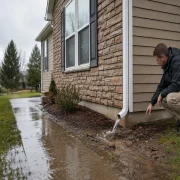
Mosquitoes inhabit settings worldwide and throughout the United States. While some animals have evolved to survive in suburban surroundings close to humans, others live in forests, marshes, or fields. Mosquitoes live in water until adulthood as larvae—the first stage following hatching from an egg—and pupae, the transitional stage between larva and adult. They deposit eggs in water. Usually, the pest won’t be too far from a standing water source.
Because the water in permanent water sources—lakes, ponds, marshes, and swamps—is slow or unmoving, mosquitoes find great spots to lay eggs. Certain kinds of mosquitoes will lay eggs in moist soil or containers, utilizing standing water produced by rain, snow, or even agricultural irrigation. The eggs dry out and hatch when water floods the container or ground.
What Damage Can Mosquitos Cause, and Are They Dangerous?
Most mosquitoes in the United States are just a nuisance, even if some can carry germs or act as vectors for major illnesses and diseases. Although they cannot cause illness or spread germs, nuisance mosquitoes can be really bothersome, and some people—especially young children—are more sensitive to mosquito bites than others.
Conversely, some mosquitoes can transmit sickness, therefore affecting the people they bite. A mosquito cannot infect a human until it first consumes blood from an animal or person with a disease. The germs have to travel from the gut of the mosquitoes into their body and subsequently into their salivary glands. Saliva from a mosquito biting another person can transfer the germ down the proboscis into the new individual who might then acquire the disease.

Tips to get rid of mosquitos
- Mosquitoes deposit their eggs in standing water, either clean or contaminated. Thus, refill water in trash buckets, birdbaths, flower pots, or pools at least once a week.
- Clear any trash from your backyard that gathers water so mosquitoes cannot deposit eggs there.
- Store-bought mosquito traps entice, capture, and kill insects using carbon dioxide or human fragrance attractants. Some traps, meanwhile, are costly, and success rates could vary. These devices attract mosquitoes using UV light sources and electrocute them.
- Ovitraps: Designed to kill mosquitoes visiting to deposit eggs, these manmade breeding containers
- Using basic hand-held pumps or insecticide bottles around the entryway and windows, residual sprays—containing permethrin, N, N-diethyl-meta-toluamide (DEET), or even citronella oil—can be sprayed to stop mosquitoes from getting into the house. The results last a few days.
- If your mosquito issue is serious or if you are purchasing a new house that is known to be a mosquito breeding ground, you may wish to pay for professional fumigation.
Conclusion
Getting rid of mosquitoes requires learning several techniques. Controlling mosquitoes can mean keeping them off your skin, off your house, and away from your yard.
References
- https://www.medicinenet.com/how_do_i_get_rid_of_mosquitoes_in_my_home/article.htm
- https://hicare.in/blog/how-to-get-rid-of-mosquitoes-inside-the-house/
- https://www.homedepot.com/c/ab/how-to-get-rid-of-mosquitoes/9ba683603be9fa5395fab90c4977a49
- https://www.forbes.com/home-improvement/pest-control/get-rid-of-mosquitos/





Comments